


Apr 19, 2016
- Complete the sentences below. Use the key words if necessary.
- Transport and additional costs
key words
Companies exporting or importing goods use standard arrangements called — short for International Commercial Terms, established by the International Chamber of Commerce (ICC) – that state the responsibilities of the buyer and the seller. They determine whether the buyer or the seller will pay — the costs on top of the cost of the goods. These include transportation or shipment, - preparing all the necessary documents, — completing import documents and paying any import duties or taxes, and transport insurance.
The E and F terms
key words
There are 13 different Incoterms that can be divided into 4 different groups:
1) the E Term (Departure),
2) the F Terms (Free, Main Carriage Unpaid),
3) the C Terms (Main Carriage Paid),
4) the D Terms (Delivered/Arrival).
Each group of terms adds more responsibilities to the seller and gives fewer to the buyer.
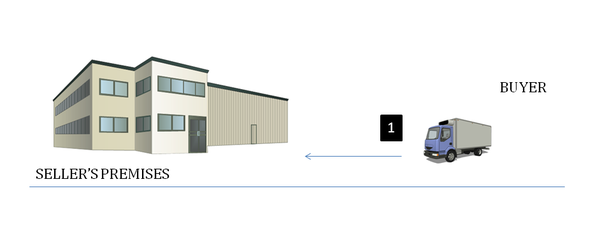
The E term is EXW or Ex Works. This means that the buyer collects the goods at the seller’s own — place of business — and arranges insurance against loss or damage to the goods in transit.
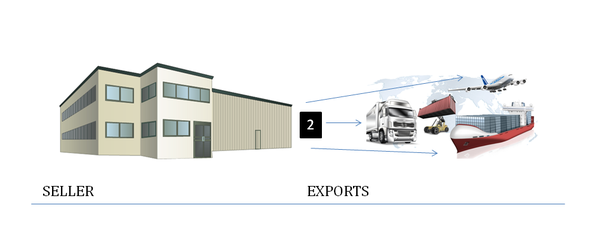
In the second group, the F terms, the seller delivers the goods to a carrier appointed by the buyer and located in the seller’s country. The buyer arranges insurance.
• FCA or Free Carrier means that the goods are delivered to a named place where the carrier can load them onto a truck, train or aeroplane.
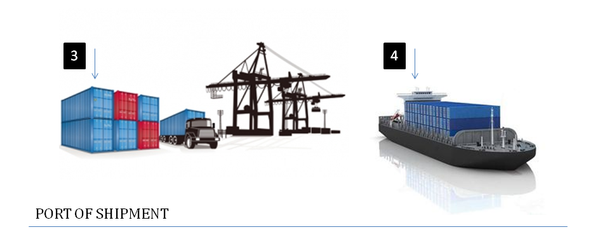
• FAS — Free Alongside Ship means that seller delivers the goods to the quay next to the ship in the port.
• FOB — Free On Board means that the seller pays for loading the goods onto the ship.
The C and D terms
key words
The third group, the C terms, the seller arranges and pays for the or transportation of the goods, but not for the payment of customs duties and taxes. Transportation of goods is also known as .
• In CFR — Cost and Freight (used for ocean freight) and CPT — Carriage Paid To ... (used for air freight and land freight), the buyer is responsible for insurance.
• In the terms CIF — Cost, Insurance and Freight (used for ocean freight) and CIP — Carriage and Insurance Paid To ... (used for air freight and land freight), the seller arranges and pays for insurance.
In the fourth group, the D Terms, the seller pays all the costs involved in transporting the goods to the country of destination, including insurance.
• In DAF — Delivered At Frontier, the importer is responsible for preparing the documentation and getting the goods through customs.
If the goods are delivered by ship to a port, the two parties can choose who pays for unloading the goods onto the quay. The two possibilities are:
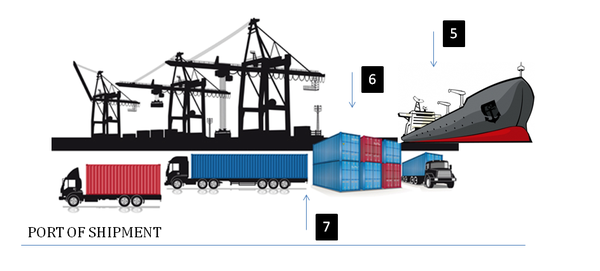
• DES — Delivered Ex Ship — the buyer pays for unloading the goods from the ship
• DEQ — Delivered Ex Quay — the seller pays for unloading the goods from the ship to the quay, and for the payment of customs duties and taxes.
If the goods go through customs and are delivered to the buyer, there are two possibilities:
• DDU — Delivered Duty Unpaid — the buyer pays any import taxes
• DDP — Delivered Duty Paid — the seller pays any import taxes.
- Transport and additional costs
- Label the diagram using the abbreviations for Incoterms.
- 1. The buyer collects the goods at the seller’s own premises (#1):
- EXW
- DAF
- 2. Seller delivers to a carrier in its country (#2):
- FCA
- FAS
- 3. Seller delivers to a port of shipment (#3):
- FOB
- FAS
- 4. Seller delivers to a port of shipment (#4):
- FOB
- FAS
- 5. Seller delivers to a port of destination (#5):
- DES
- DEQ
- 6. Seller delivers to a port of destination (#6):
- DES
- DEQ
- 7. Seller delivers to a port of destination (#7):
- SPT/CIP
- SFR/SIF
- 8. Seller delivers to the customs by air or land (#8):
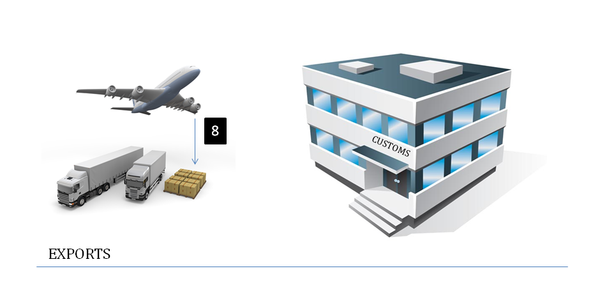
- DAF/SFR/SIF
- DAF/CPT/CIP
- 9. Seller delivers to buyer (#9):
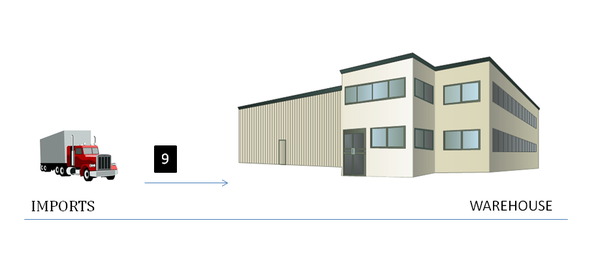
- DDP only
- DDU/DDP
- DDU only
- 1. The buyer collects the goods at the seller’s own premises (#1):
© 2020 DrillPal.com