


Jun 1, 2016
- Read through the explanations.
- A | Business and businesses

Business is the activity of producing, buying and selling goods and services. A business, company, firm or more formally, a concern, sells goods or services. Large companies considered together are referred to as big business.
A company may be called an enterprise, especially to emphasize its risk-taking nature.
Businesses vary in size, from the self-employed person working alone, through the small or medium enterprise (SME) to the large multinational with activities in several countries.
A large company, especially in the US, is a corporation. The adjective, corporate, is often used in these combinations:
• corporate culture
• corporate ladder
• corporate headquarters
• corporate logo
• corporate image
• corporate profits
B | Commerce
Commerce is used to refer to business:
• in relation to other fields: ‘literature, politics and commerce’
• in relation to government departments that deal with business: the US Department of Commerce
• in the names of organizations which help business: chambers of commerce
• on the Internet: electronic commerce or e-commerce
The adjective commercial describes money-making business activities:
• commercial airline
• commercial disaster
• commercial artist
• commercial land
• commercial television
! You can’t say ‘a commerce’.
C | Enterprise
In 1970s Britain, there were state-owned or government-owned companies in many different industries such as car manufacturing and air travel. Some industries had been nationalized and were entirely state-owned, such as coal, electricity and telephone services. In the 1980s, the government believed that nationalized companies were bureaucratic and inefficient, and many of them were privatized and sold to investors.
Enterprise is used in a positive way to talk about business, emphasizing the use of money to take risks.
D | Word combinations with ‘enterprise’
Free or private enterprise — business activity owned by individuals, rather than the state.
Enterprise culture — an atmosphere which encourages people to make money through their own activities and not rely on the government.
Enterprise economy — an economy where there is an enterprise culture.
Enterprise zone — part of a country where business is encouraged because there are fewer laws, lower taxes, etc.
- A | Business and businesses
- Choose right expression to fill the gap.
- 1. Before we employ people, we like to put them in job situations to see how they do the work and fit into the . . . .
- corporate ladder
- corporate culture
- corporate image
- corporate profits
- corporate headquarters
- corporate logo
- 2. The company has built a grand . . . as a permanent symbol of its power.
- corporate image
- corporate ladder
- corporate headquarters
- corporate logo
- corporate profits
- corporate culture
- 3. Our stylish new . . . shows our wish to be seen as a more international airline.
- corporate headquarters
- corporate logo
- corporate image
- corporate profits
- corporate culture
- corporate ladder
- 4. The economy is growing and . . . are rising.
- corporate ladder
- corporate logo
- corporate headquarters
- corporate culture
- corporate profits
- corporate image
- 5. The rules were introduced to protect women working in factories, but today they make it harder for women to climb the . . . .
- corporate image
- corporate culture
- corporate profits
- corporate logo
- corporate headquarters
- corporate ladder
- 6. Companies hit by computer crime are not talking about it because they fear the publicity will harm their . . . .
- corporate ladder
- corporate headquarters
- corporate culture
- corporate image
- corporate profits
- corporate logo
- 1. Before we employ people, we like to put them in job situations to see how they do the work and fit into the . . . .
- Someone is talking about the word combinations in B opposite. Which are they referring to each time?
- 1. It carries passengers and goods, it’s not military.
- commercial disaster
- commercial airline
- commercial artist
- commercial television
- commercial land
- 2. It’s going to be used for offices and factories, not houses.
- commercial television
- commercial artist
- commercial disaster
- commercial airline
- commercial land
- 3. It receives no money from the state to make its programmes.
- commercial artist
- commercial airline
- commercial land
- commercial disaster
- commercial television
- 4. He does advertisements: you can’t find his work in art galleries.
- commercial television
- commercial airline
- commercial disaster
- commercial land
- commercial artist
- 5. It was an artistic success, but unfortunately it lost a lot of money.
- commercial television
- commercial airline
- commercial land
- commercial disaster
- commercial artist
- 1. It carries passengers and goods, it’s not military.
- Use expressions from D opposite to complete this text.
- key expressions
Margaret Thatcher often talked about the benefits of or . She said that her achievement was to establish an in Britain, an economy where people were encouraged to start their own companies and where it was acceptable to get rich through business: an .
In some areas, to government reduced the number of laws and regulations to encourage businesses to move there. Business were encouraged to set up in the London Docklands, for example. The Docklands were an .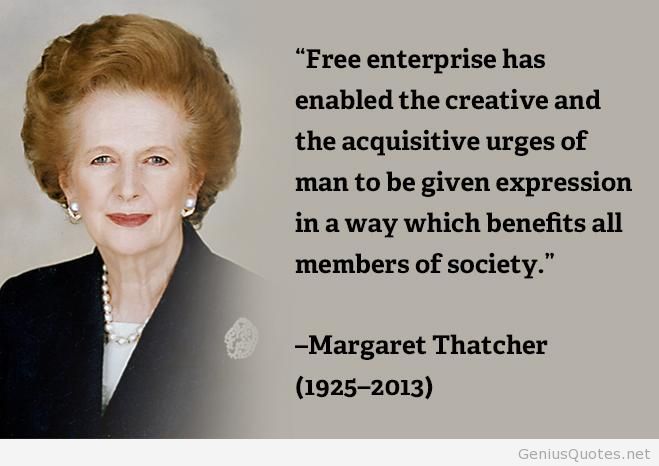
- key expressions
- Over to you
- Is the public sector in your country very big? Do people who work in it have good working conditions compared to those in the private sector?
In your country, which of these industries are in the public sector, and which are in the private sector? Which have been privatized?
• bus transport
• rail transport
• electricity supply
• telephone services
• postal services
• water supply
- Is the public sector in your country very big? Do people who work in it have good working conditions compared to those in the private sector?
© 2020 DrillPal.com